hinst-website 🌐
I’ve cleaned up the code for my personal website. I structured it into the following packages:
-
server - root package
- base - shared utilities needed by all other packages
- db_objects - for interacting with the SQL database
- page_data - for HTML templates
- rest_objects - for objects handled (received and returned) by the REST API
-
gophers - general-purpose functions for Go
- I moved this package into a separate Git repository and generated a cover image for it, which is shown in the screenshot.
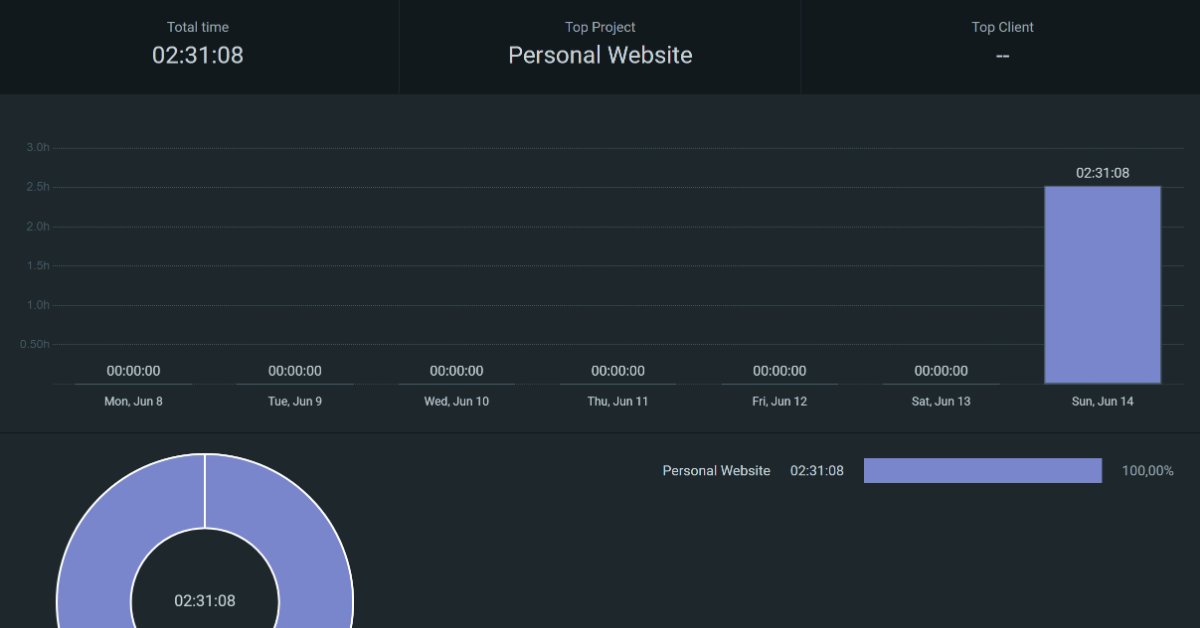
I didn’t have much free time to code last week, so I only logged 2 hours and 30 minutes in my tracker.
I’ve been thinking about whether there is any point in adding an ORM and REST frameworks to my project. I haven’t found a definitive answer yet. However, I have this idea:
- Run a load test to see how many requests per second my website can handle.
- Implement a REST framework and repeat the test. Then, out of curiosity, compare the results: did it get faster or slower?
It’s an interesting idea, but whether I’ll find the time for it is another matter. Right now, I only have time for small tasks, while rewriting the project for a new framework is a long-term undertaking.
Experiments with local LLMs
I found two different approaches to configuration:
-
Offload 100%
- Mode for long chats. Generation is fast, but context switching is very slow. It’s impossible to jump between chats or change the prompt on the fly.
-
Offload 50%
- Mode for switching contexts. Generation is slow, but context switching is fast. You can jump between chats and change prompts on the fly.
It’s interesting; it’s like human thinking: you can constantly switch between tasks, but work will proceed slowly. Or, you can focus on a single task and work quickly without distractions (I don’t know how to do the latter) 🙃